
How geothermal energy works
Geothermal energy plays an important role in the energy transition.
Deep underground, the temperature is relatively stable (about 10°C).
A geothermal system uses the energy in the ground to heat or cool a building with an energy efficiency of up to 400% in some cases. The three components of a geothermal system:
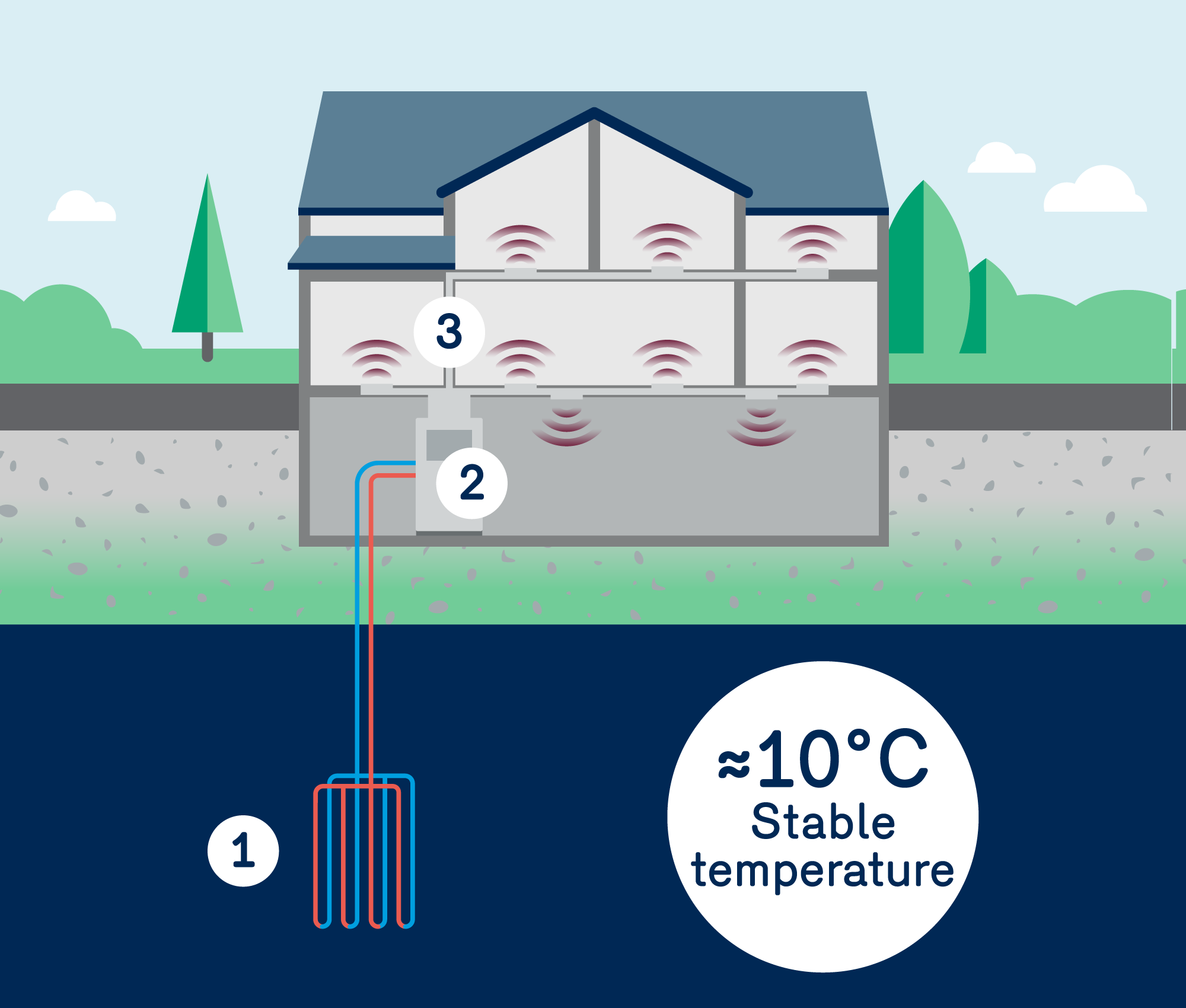

An underground circuit several dozen metres below ground, into which a U-shaped pipe is inserted. A fluid circulates through the pipe and is used to transfer heat according to heating or cooling needs.

A geothermal heat pump installed inside the building.

A distribution network: The heat pump is coupled to an air or water distribution system to transfer heat.
What is geothermal energy?
Choosing this energy source means opting for a forward-looking solution without compromising on today's needs.
Frequently asked questions
Geothermal energy saves up to 60% on heating costs compared with a traditional system. By using free heat from the ground, geothermal heat pumps can achieve energy efficiency of up to 400% in some cases.
The cost of a geothermal system includes the cost of drilling the wells, as well as purchasing, installing and connecting the geothermal heat pump to the wells. Although geothermal energy is more expensive than installing a standard heat pump, Hydro-Québec subsidies significantly reduce the system's cost. Additionally, savings of up to 60% on heating costs allow for a quick return on the additional investment in geothermal energy
Geothermal energy benefits a wide variety of homes. Savings will vary according to a number of factors, such as how well the house is insulated, how many people live there, heating and cooling needs and so on. One of our experts can assess your energy needs to determine whether geothermal energy is right for you.